
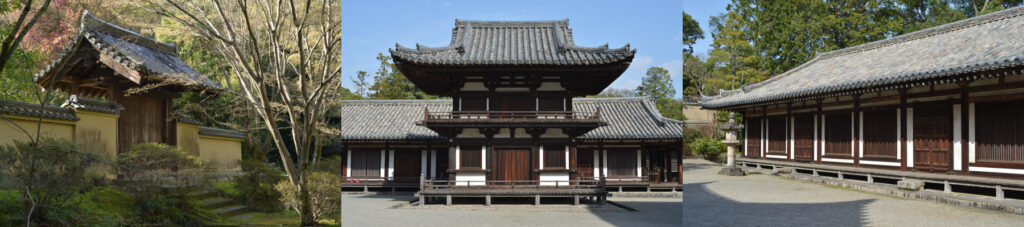
Understanding Nara, one place at a time
Nara’s temples, shrines, and old roads are not just famous landmarks.
They are places shaped by people’s lives, beliefs, and everyday movement over a very long time.
This page offers a gentle way to understand Nara’s history.
Not through dates and difficult terms, but through simple ideas you can keep in mind while walking.
You don’t need to remember everything.
Even understanding one small reason behind a place can quietly change how it feels.
Temples: Places of prayer, learning, and daily life
Temples in Nara were not built only for quiet prayer.
For many centuries, they were places where people gathered to learn, work, and discuss important matters.
Religion, education, and politics often lived side by side inside temple grounds.
When you visit a temple, try not to see it as a single building.
Look at how many halls there are, how they are arranged, and how people move through the space.
It helps to ask a simple question:
“What kind of daily life once happened here?”
That question alone makes temples easier to understand.
→ Related pages:
Shrines: Sacred places rooted in nature
Shrines feel different from temples, and there is a reason for that.
Many shrines were built not to stand out, but to protect something already sacred—
a forest, a mountain, a rock, or even a quiet space.
In Nara, shrines and temples existed side by side for a very long time.
People did not always separate them clearly, and daily life flowed naturally between the two.
When you visit a shrine, notice its surroundings more than the building itself.
The trees, the light, and the air are part of the place.
This is why shrines often feel calm, even when they are close to the city.
→ Related pages:
Old roads: How people moved through Nara
Old roads are not planned attractions.
They are traces of people walking the same way again and again.
Some roads connected temples and shrines.
Others led to markets, homes, or fields.
What remains today is the result of daily movement over many centuries.
Walking an old road is different from walking a modern street.
It curves gently, narrows unexpectedly, and often leads somewhere quietly meaningful.
When you slow down, these roads begin to tell their own stories.
→ Related pages:
How this history helps your walk
You don’t need to study before walking through Nara.
This history is here to support your experience, not to test you.
Understanding why a place exists helps you notice things more naturally—
the shape of the land, the quiet corners, the pauses between destinations.
If you would like to explore these places on foot,
you can find ready-to-follow routes in the Walking Guide.
A gentle note
History doesn’t have to be difficult.
When you understand one place at a time,
walking through Nara becomes slower, quieter, and more personal.
Take what you need,
leave the rest for another day.