
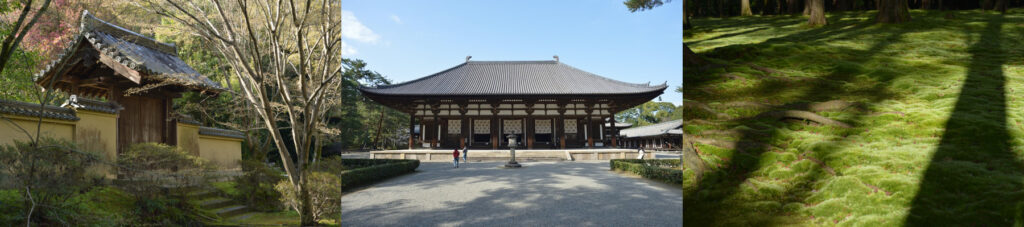
Overview: Exploring Western Nara
Western Nara is home to some of Japan’s most important historic temples.
Unlike central Nara around Todai-ji and Nara Park, these sites are located outside the walkable city center and are best visited by train, bus, or taxi.
This area offers a quieter and more spacious atmosphere, making it ideal for travelers who want to explore early Japanese Buddhism, temple architecture, and World Heritage sites at a slower pace.
- Recommended visit length: half day to full day
- Transportation: train + short walks
- Atmosphere: calm, open, and less crowded
How Western Nara Is Different from Central Nara
Not a Walking Area
Temples in Western Nara are spread across a wide area.
Walking between them is usually not practical, so travel by train or bus is required.
Visits are best planned as individual stops or small combinations, rather than one continuous walk.
Why Visit Western Nara?
- Home to UNESCO World Heritage Sites
- Key locations for understanding early Buddhist history in Japan
- Fewer crowds than Nara Park
- A calm alternative to central sightseeing areas
Major Temples in Western Nara
Horyu-ji
Horyu-ji is famous for its world’s oldest surviving wooden buildings and is one of Japan’s most significant Buddhist temples.
As a UNESCO World Heritage Site, it represents the historical core of Western Nara.
This temple is a must-visit for travelers interested in early Buddhist architecture and world history.
Yakushi-ji
Yakushi-ji is known for its symmetrical layout and elegant temple halls.
The site combines ancient design with modern restoration, offering a clear sense of classical Buddhist temple aesthetics.
It is especially appealing to visitors interested in architecture and photography.
Toshodai-ji
Toshodai-ji was founded by the Chinese monk Ganjin (Jianzhen) and is known for its quiet, contemplative atmosphere.
Compared to larger temples, it feels more subdued and peaceful, making it a good choice for travelers seeking reflection and calm.
Smaller Temples Worth Visiting Nearby
In addition to the major temples, Western Nara is home to several smaller sites that are easy to combine with a visit to Horyu-ji.
Hokiji
Hokiji is a UNESCO World Heritage Site located near Horyu-ji.
It is best known for its three-story pagoda, one of the oldest surviving pagodas in Japan.
The grounds are compact and quiet, making Hokiji an easy and rewarding addition to a Horyu-ji visit.
Horinji
Horinji is a small temple located close to both Horyu-ji and Hokiji.
It offers peaceful grounds and gentle views of the surrounding countryside.
This temple is ideal for travelers looking for a short, calm walk between visits.
Suggested Ways to Visit Western Nara
Half-Day Trip
- Horyu-ji + Hokiji + Horinji
A compact route focused on World Heritage sites and quiet temples
or
- Yakushi-ji + Toshodai-ji
A balanced combination of architecture and atmosphere
Suitable for travelers with limited time.
Full-Day Trip
- Morning: Horyu-ji, Hokiji, Horinji
- Afternoon: Yakushi-ji and Toshodai-ji
This option allows for a deeper and more relaxed experience of Western Nara.
Transportation Basics
By Train
JR and Kintetsu lines connect central Nara with Western Nara.
Most major temples are located within walking distance of nearby stations.
By Bus or Taxi
Buses and taxis are useful for short distances between temples.
Taxis are especially convenient when visiting multiple sites in one day.
Who Western Nara Is For
- Travelers who have already explored Todai-ji and Nara Park
- Visitors interested in World Heritage sites and early Buddhist history
- Those who prefer quieter temple areas
- Travelers comfortable using trains or buses
Continue Exploring Nara
- Walkable Nara
– Todai-ji, Nigatsu-do & Sangatsu-do - Southern Nara Temples
– Asuka, Yoshino & sacred landscapes