【The Guidance of Knowledge】
This piece was crafted with the help of modern AI to better illuminate the timeless beauty of our ancient heritage.

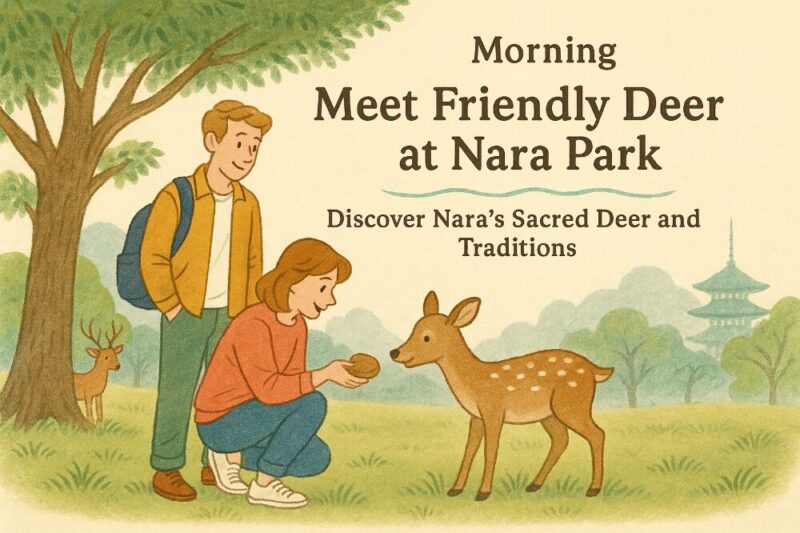
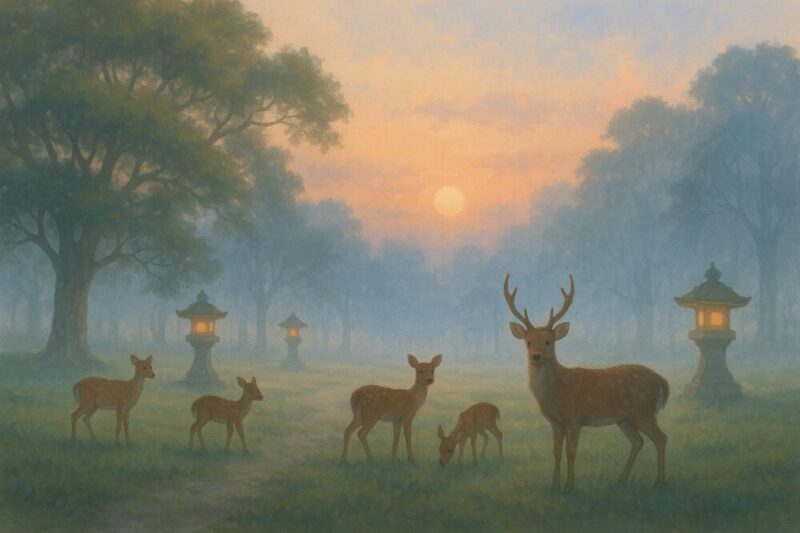
“In the fields of Kasuga, the deer call out for their mates, their voices echoing through the morning dew.” — Reflecting the imagery of Manyoshu, where deer have been symbols of longing and divinity for centuries.
Imagine stepping into a landscape where the boundary between the human world and the divine is as thin as the morning mist. In Nara Park, history doesn’t just sit in museums; it walks beside you on four legs. With over 1,200 wild deer roaming freely, this is a living sanctuary where nature and spirituality have coexisted for over 1,300 years.
Suggested time: 1–1.5 hours. The best magic happens before the city fully wakes up.
Why are these deer so revered? Legend tells us that when Kasuga Taisha Shrine was founded in the 8th century, a powerful deity arrived on the back of a mythical white deer to protect the new capital. Since that day, the deer of Nara have been cherished as Sacred Messengers (Shinroku).
To harm a deer was once a grave offense; today, they are protected as National Treasures. As you walk among them, you are participating in a tradition of coexistence that is unique in the world.
One of the most heart-warming experiences in Nara is the “bow.” Many deer have learned to mimic the polite Japanese custom. If you bow to them, they may bow their heads in return, asking for a treat.
While they are friendly, remember they are wild spirits. A few tips for a harmonious encounter:
Nara Park serves as the gateway to some of the world’s most significant cultural treasures:
| Detail | Information |
|---|---|
| Admission | The park is Free and open 24/7. |
| Access | A 5-10 minute walk from Kintetsu Nara Station. |
| What to Bring | Comfortable shoes for walking on grass and gravel, and Cash for deer crackers. |
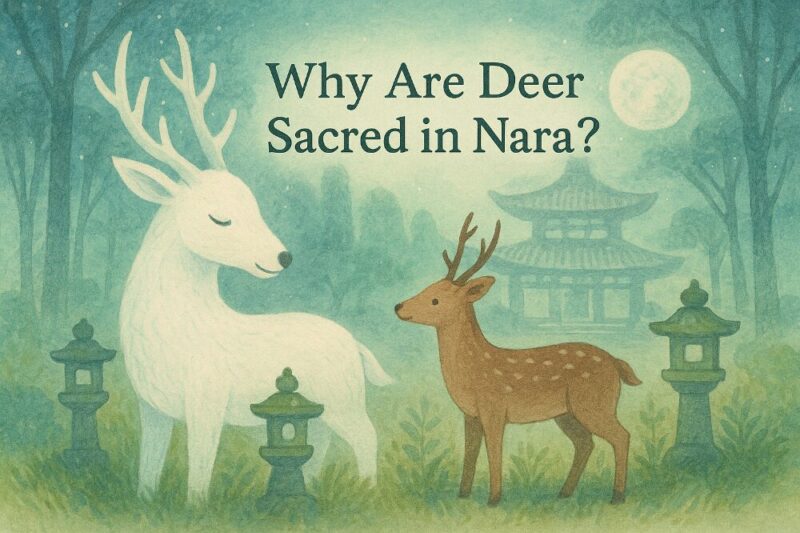
The reverence for Nara’s deer is rooted in an ancient legend. According to Shinto tradition, when Kasuga Taisha Shrine was founded in the 8th century, the deity Takemikazuchi-no-mikoto appeared on Mount Mikasa riding a mythical white deer.
From that moment on, the deer were considered divine messengers of the gods. For centuries, they have been carefully protected as living national treasures. Harming one was once a crime punishable by death. Today, this deep respect continues, and you’ll find the deer roaming peacefully not just in the park, but also around the sacred grounds of Todai-ji Temple and Kasuga Taisha Shrine.
After sharing a quiet moment with the messengers of the gods, let your path lead you toward the Great Buddha of Todai-ji. The spiritual energy you felt in the park only deepens as you enter the shadows of the Great Buddha Hall.
 Discover Nara | A Perfect Day Trip to World Heritage Sites and Scenic Spots
 Late Morning|Todai-ji: A Journey into the Heart of Ancient Prayers