【The Guidance of Knowledge】
This piece was crafted with the help of modern AI to better illuminate the timeless beauty of our ancient heritage.

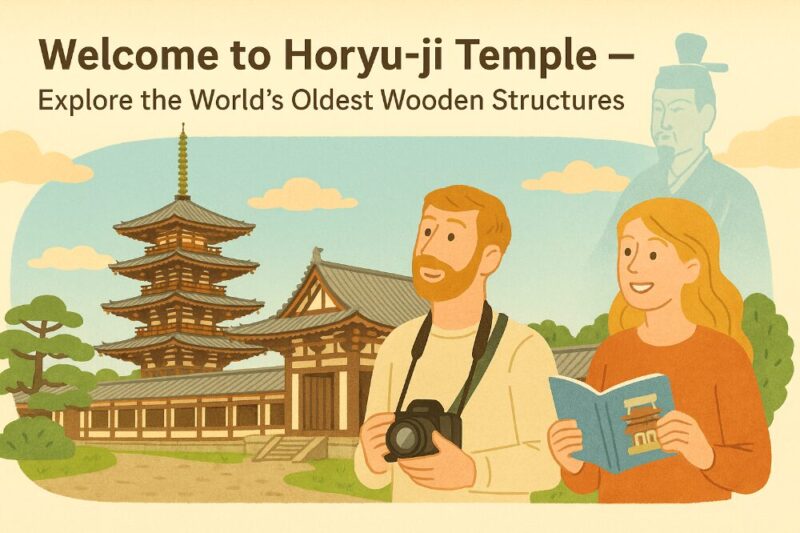
“On the hills of Ikaruga, where the white clouds drift, the memories of the Prince remain forever.” — Inspired by the spirit of Manyoshu, reflecting on the legacy of Prince Shotoku.
As the afternoon sun begins to mellow, your journey takes you to Ikaruga, a place where time seems to have slowed down since the 7th century. Horyu-ji is not simply a collection of “old buildings”—it is the very cradle of Japanese Buddhism and the enduring dream of Prince Shotoku, who sought to build a nation rooted in harmony and wisdom.
Travel note: Horyu-ji is about 40 minutes from central Nara. Suggested visit time: 2–3 hours. Walk slowly; every pillar here has a story.
As you enter the central gate, you are greeted by the Five-Story Pagoda, the oldest of its kind in the world. It has survived countless earthquakes and storms for over 1,300 years.
Beside it stands the Kondo (Main Hall). If you look closely at the Shaka Triad inside, you will see the famous “Archaic Smile”—a gentle, mysterious expression on the Buddha’s face that was characteristic of early Japanese Buddhist art. It is a smile that has comforted travelers for over a millennium.
In this modern sanctuary, you will find the Kudara Kannon. Tall, slender, and impossibly graceful, this wooden statue seems to float in the air. Many visitors find themselves standing in silence before her, moved by a beauty that transcends language and time. Don’t miss the Tamamushi Shrine, once adorned with the iridescent wings of thousands of jewel beetles.
A short walk through a quiet stone path leads you to the octagonal Yumedono. It stands on the site of Prince Shotoku’s former palace. Legend says the Prince would retreat here to meditate and receive divine guidance in his dreams. Even today, the air around this hall feels particularly still, as if the Prince’s meditation has never truly ended.
| Detail | Information |
|---|---|
| Opening Hours | 8:00 AM – 5:00 PM (closes 4:30 PM in winter) |
| Admission Fee | ¥2,000 (Covers all major areas) |
| Payment | Cash Only. Like the ancient structures, the temple keeps its traditional ways. |
How to Get There:
As the shadows lengthen, it is time to return to the heart of Nara. For the final chapter of your day, we suggest visiting Kasuga Taisha Shrine. Imagine the transition from the ancient wood of Horyu-ji to the brilliant vermilion lanterns of the forest as night begins to fall.
Continue to Kasuga Taisha Shrine →
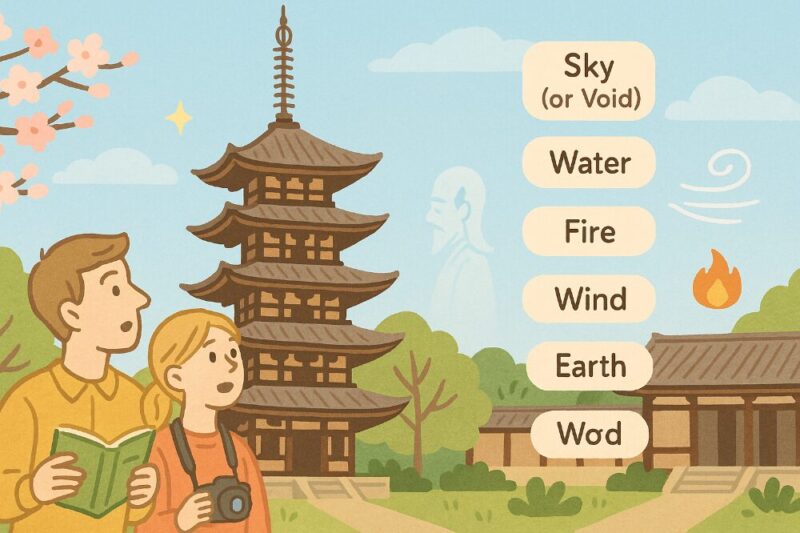
Did you know that Horyu-ji’s Five-Story Pagoda is the oldest wooden pagoda in the entire world?
It has stood here for over 1,300 years without collapsing, even through earthquakes and storms!
Horyu-ji was built by Prince Shotoku in 607 AD.
He played an important role in bringing Buddhism to Japan.
Today, he is respected as one of Japan’s great historical leaders.
The name Horyu-ji (法隆寺) means “Temple of the Flourishing Dharma.”
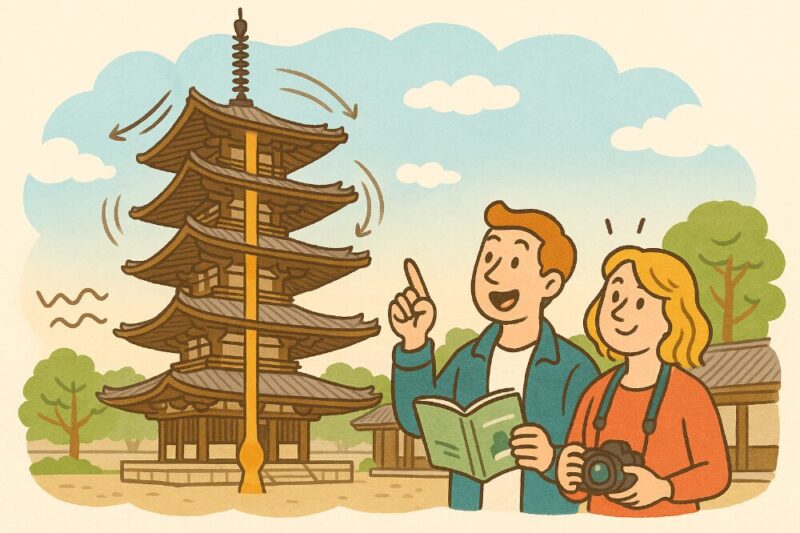
The pagoda’s five levels represent the five elements in Buddhism:
This design also helps the structure stay stable during earthquakes — an ancient Japanese engineering secret!
Horyu-ji houses over 2,300 important cultural properties, including statues, paintings, and scriptures.
Some are considered National Treasures and are kept safely in the temple’s treasure house.
Official Website: Horyu-ji Temple Official Website (English)
Horyu-ji Temple is a perfect place to enjoy history, culture, and serenity all in one afternoon.
Whether you’re a history lover, an architecture fan, or simply looking for a quiet place to relax, Horyu-ji will give you an unforgettable experience.
After a peaceful afternoon at Horyu-ji, it’s time to return to central Nara.
As evening approaches, head to Kasuga Taisha Shrine, where vermilion halls and lantern-lined paths glow softly in the fading light.
 Nara in Every Season — Explore the Beauty of Yamatoji Through Illustrations
 Discover Nara | A Perfect Day Trip to World Heritage Sites and Scenic Spots