【The Guidance of Knowledge】
This piece was crafted with the help of modern AI to better illuminate the timeless beauty of our ancient heritage.

Have you ever wondered what Nara, Japan’s ancient capital, looks like through the eyes of an artist?
Welcome to our virtual gallery, where AI-generated illustrations bring Nara’s most iconic landmarks to life. This is more than just a collection of pictures; it’s a visual journey that blends art with history. From the gentle slopes of Mount Wakakusa to the majestic halls of Todai-ji Temple, each artwork offers a fresh perspective on the city’s timeless beauty.
Join us as we explore the stories and spirit of Nara, one illustration at a time.
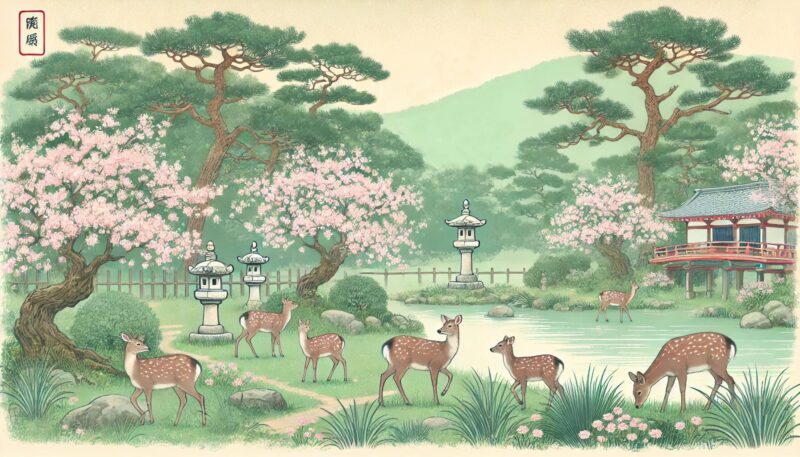
Our journey begins in Nara Park, a place unlike any other in Japan. This illustration captures the park’s signature serenity, where ancient temples and lush gardens provide a backdrop for its most famous residents: the friendly and sacred deer. Considered messengers of the gods in Shinto tradition, these gentle creatures wander freely, bowing to visitors in hopes of a special cracker. It’s a scene that perfectly encapsulates the harmony between nature, history, and spirituality in Nara.
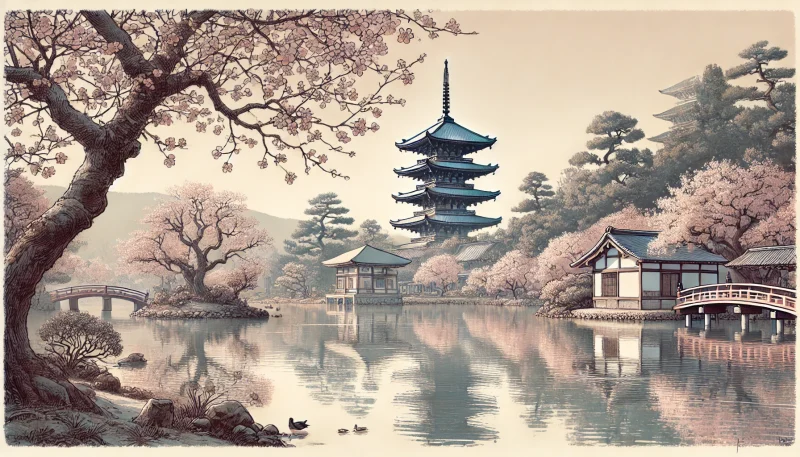
This artwork reflects the tranquil beauty of Sarusawa Pond, a place where time seems to stand still. The elegant five-story pagoda of Kōfuku-ji Temple casts a perfect silhouette on the calm water, creating a postcard-perfect scene that has enchanted visitors for centuries. Located just a short walk from the bustling city center, it’s the perfect spot for a quiet pause to soak in the ancient capital’s charm.
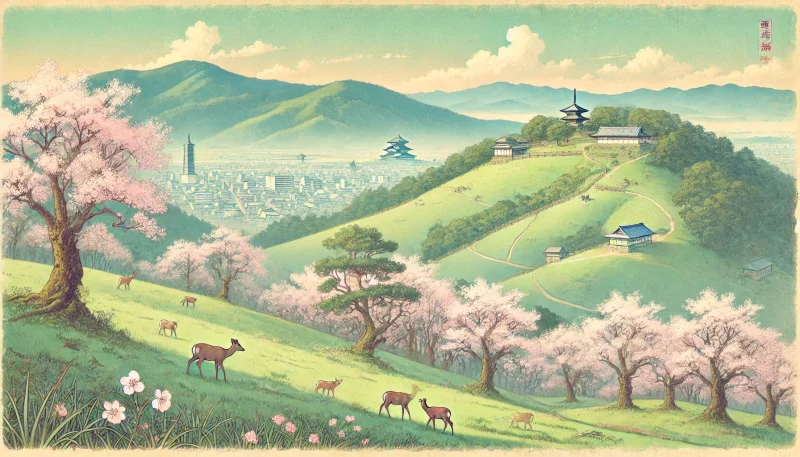
Overlooking Nara Park, the gentle slopes of Mount Wakakusa offer one of the most breathtaking panoramic views of the city. While beautiful year-round, the mountain is famous for the “Yamayaki” festival held every January, where the entire hillside is set ablaze in a spectacular ceremony. This tradition has shaped the mountain’s iconic landscape, leaving it covered in soft grass—a perfect canvas for both the rising sun and this artistic interpretation.
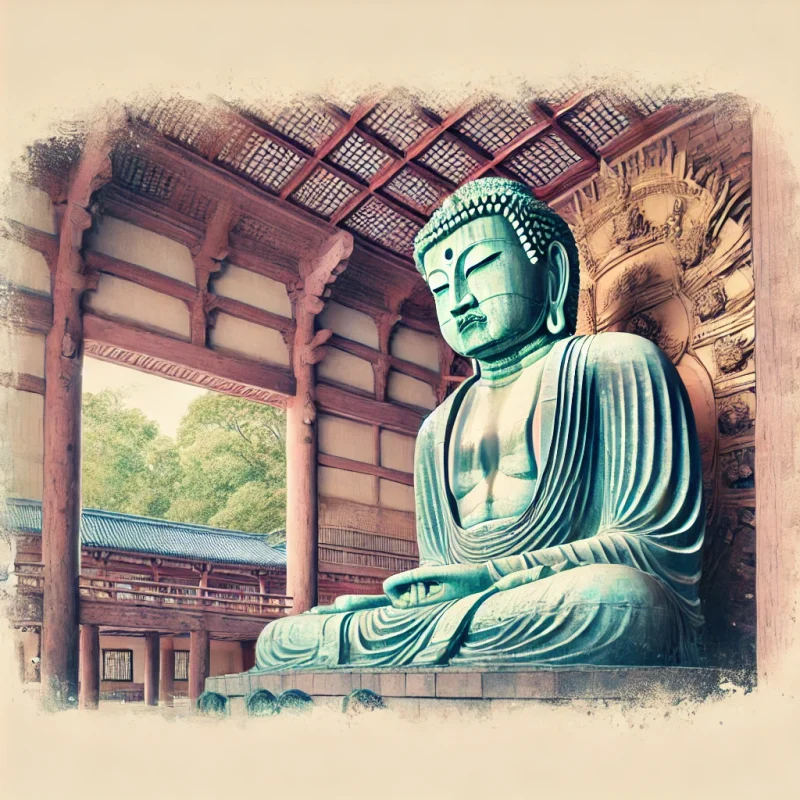
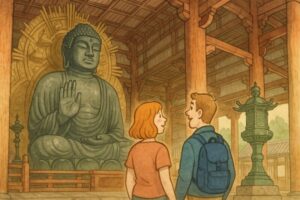
Step into a world of overwhelming scale and profound peace. This illustration attempts to capture the awe-inspiring presence of the Great Buddha (Daibutsu) at Todai-ji Temple. Seated within one of the world’s largest wooden buildings, this 15-meter-tall bronze statue radiates a sense of calm that has moved visitors for over 1,300 years. It is more than a statue; it is the spiritual heart of Nara.
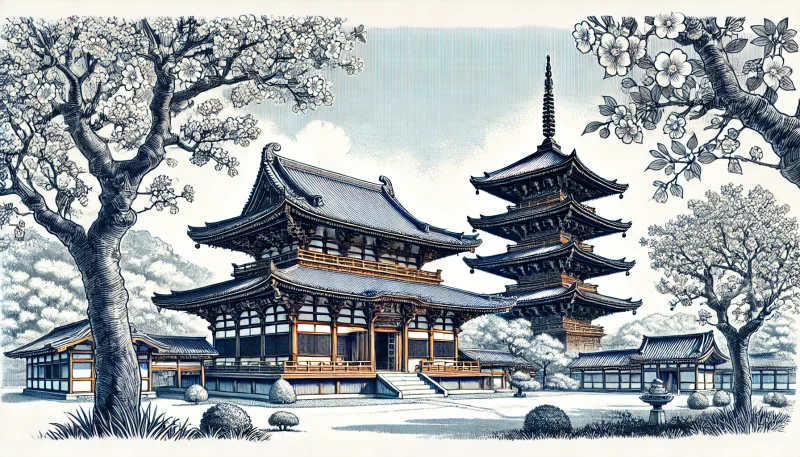
A landmark visible from across the city, the five-story pagoda of Kōfuku-ji Temple is a treasured symbol of Nara. As a UNESCO World Heritage Site, the temple grounds are a museum of history, housing priceless Buddhist sculptures and national treasures. This illustration highlights the pagoda’s graceful architecture, which stands as a testament to the city’s rich past as the capital of Japan.
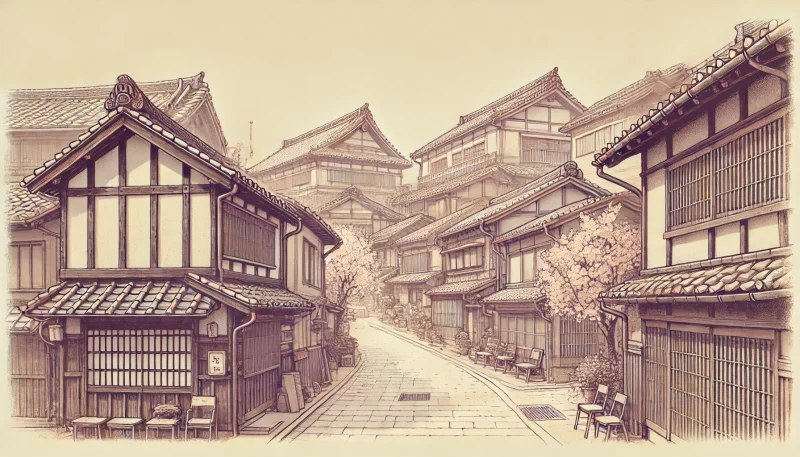
Wander through the narrow, winding streets of Naramachi, Nara’s beautifully preserved traditional merchant district. This artwork captures the nostalgic atmosphere of the area, where old wooden townhouses (machiya) have been reborn as quaint cafés, artisan shops, and charming museums. A visit here feels like stepping back in time, offering a glimpse into the daily life of old Nara.
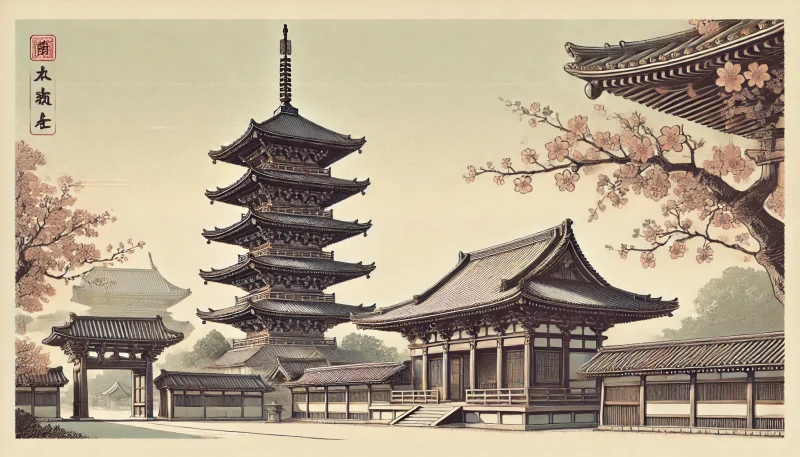
Journey to Hōryū-ji Temple, home to the world’s oldest surviving wooden structures. Founded in the 7th century, this UNESCO World Heritage Site is a cornerstone of Japan’s history. The temple’s five-story pagoda and main hall are not just architectural marvels; they are time capsules preserving the art and faith of early Japanese Buddhism. This illustration pays homage to its ancient and enduring legacy.
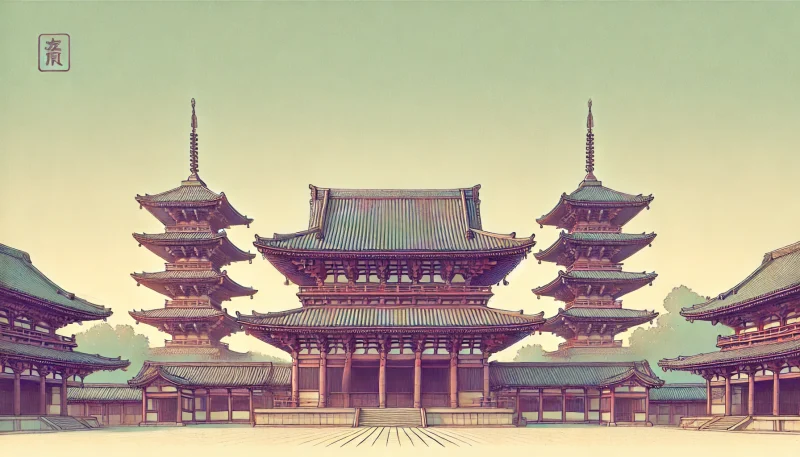
Behold the stunning symmetrical beauty of Yakushi-ji Temple. Famous for its magnificent twin pagodas, this temple is often praised as “frozen music” for its rhythmic and graceful architectural design. Originally built in the 7th century, it was meticulously reconstructed to preserve its original splendor. This artwork celebrates the temple’s unique elegance and its place as a jewel among Nara’s UNESCO World Heritage Sites.
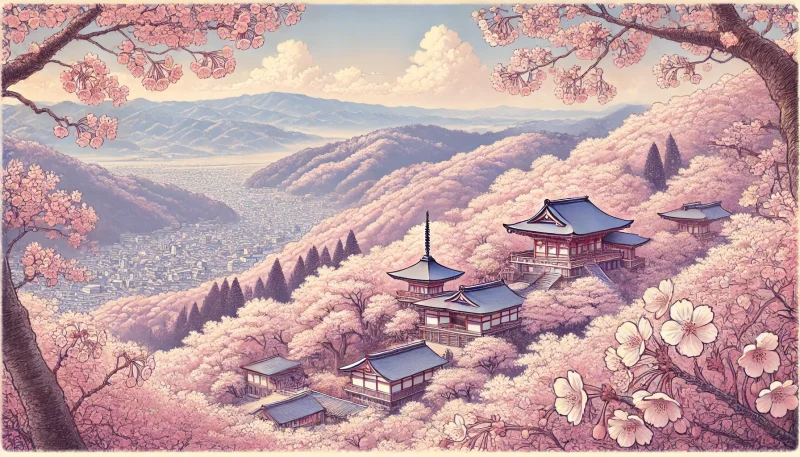
In spring, Mount Yoshino transforms into a breathtaking spectacle, earning its reputation as Japan’s most famous cherry blossom viewing spot. As this illustration depicts, thousands of sakura trees blanket the mountainside, creating a cascading sea of pink and white. It is a pilgrimage site for both nature lovers and spiritual seekers, offering one of the most unforgettable seasonal landscapes in the entire country.
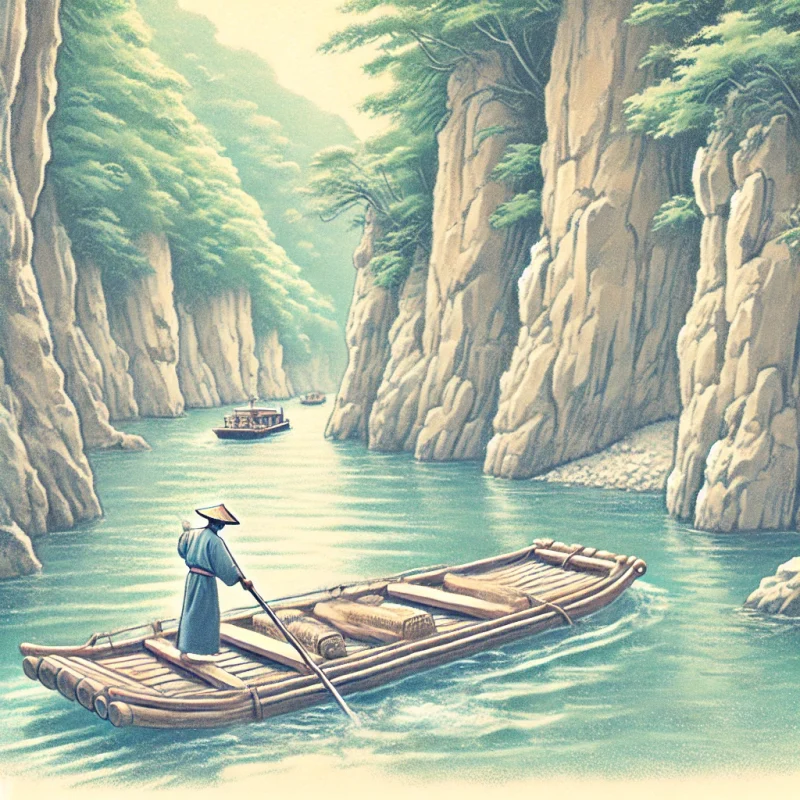
Deep in the southern part of Nara lies the stunning Dorokyo Gorge, where emerald waters carve through dramatic cliffs. This artwork captures the spirit of the traditional log raftsmen who once navigated these rivers. This vital transport method has been revived as a thrilling sightseeing experience on the Kitayamagawa River, offering visitors an unforgettable journey through one of Japan’s most breathtaking natural landscapes.
Today, the traditional raft rides have been revived as The Kitayamagawa River sightseeing experience, which started again in 1979 and remains a popular attraction for visitors.
We hope these illustrations have inspired you to see Nara in a new light—not just as a collection of historical sites, but as a living canvas of beauty, spirit, and stories.
Whether you’re planning your own journey to Japan’s ancient capital or simply dreaming of its timeless charm, we invite you to share your favorite artwork and continue exploring the endless wonders of Nara.