【The Guidance of Knowledge】
This piece was crafted with the help of modern AI to better illuminate the timeless beauty of our ancient heritage.

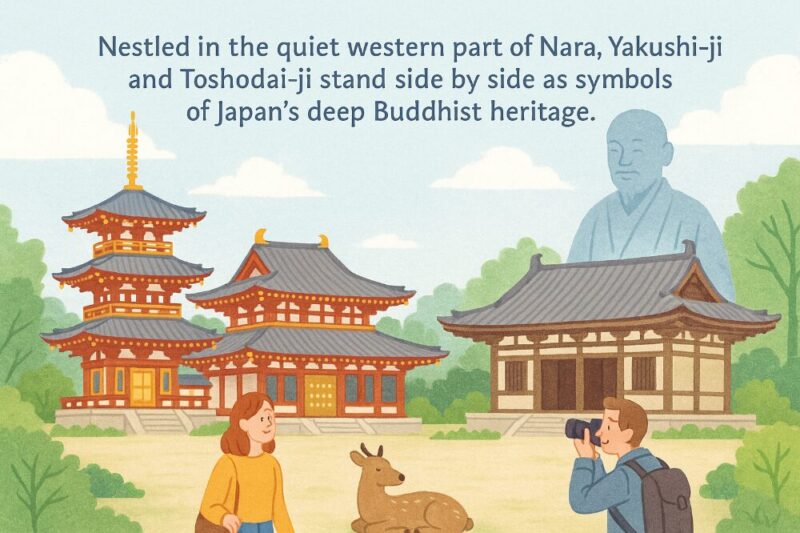
“Over the blue-green mountains, the clouds drift away; how many years have these pagodas watched the world pass by?” — A reflection inspired by the timeless beauty of Nishinokyo.
In the quiet western district of Nara, known as Nishinokyo, lie two of Japan’s most profound UNESCO World Heritage sites. Though they are close neighbors, they offer two completely different spiritual landscapes. To walk from one to the other is to experience the magnificent duality of the Nara period: the brilliant, public face of imperial prayer and the deep, weathered heart of personal devotion.
Suggested time: 2–3 hours. Tip: Both temples are a short walk from Nishinokyo Station (Kintetsu Line). The path between them is a peaceful stroll through local history.
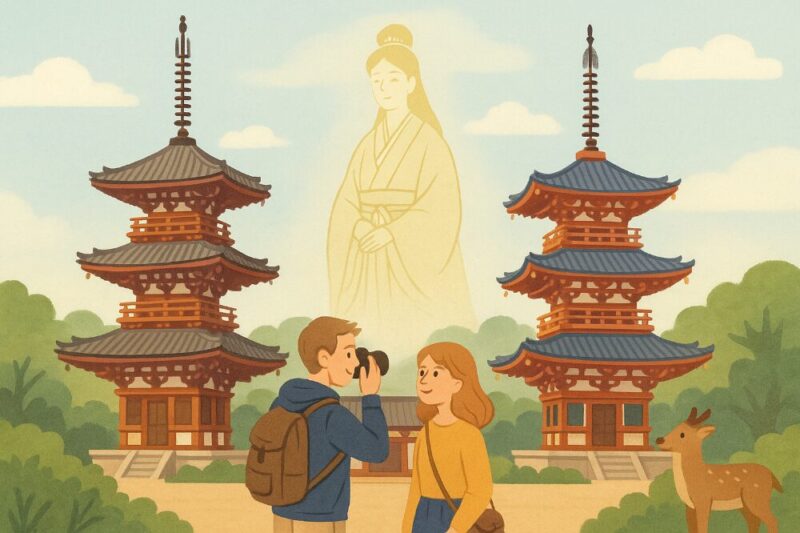
Founded in the 7th century by Emperor Tenmu, Yakushi-ji was born from a husband’s deep love. The Emperor commissioned this grand temple to pray for the recovery of his consort from a serious illness.
Yakushi-ji Temple combines history, art, and spirituality in a single place. With its striking pagodas and golden halls, it shows the grandeur of ancient Nara. For travelers, visiting Yakushi-ji is not only a chance to admire architecture but also to experience the timeless values of healing, peace, and faith that continue to inspire people today.
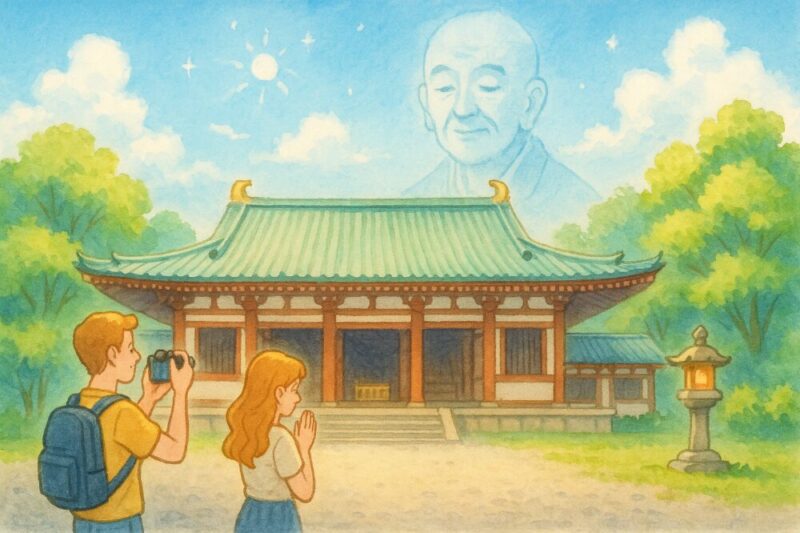
A ten-minute walk north brings you to Toshodai-ji, where the atmosphere shifts to a profound, moss-covered stillness. This temple is the legacy of Ganjin (Jianzhen), a Chinese monk who crossed the sea to bring authentic Buddhist teachings to Japan.
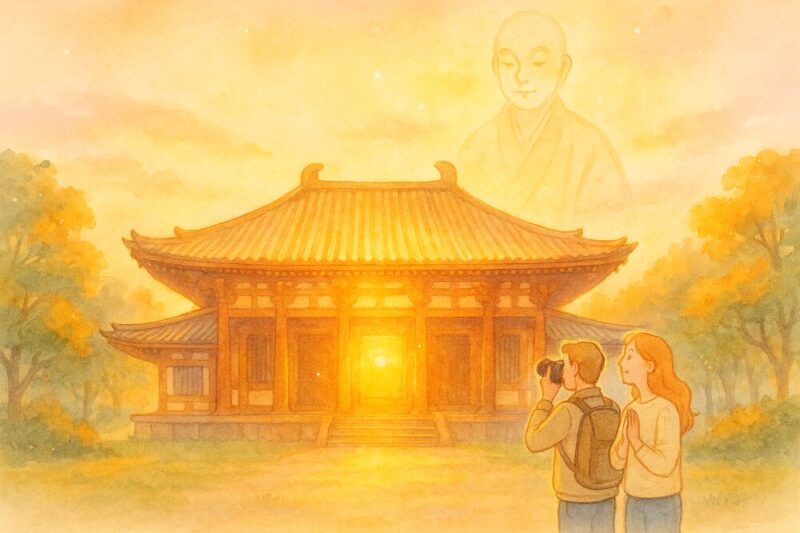
Unlike Yakushi-ji with its golden halls and pagodas, Toshodai-ji offers a calmer and more contemplative experience. Visitors can stroll through moss-covered paths, listen to the sound of birds, and feel the quiet dignity of the temple grounds. It is a place where history, nature, and spirituality come together.
At Yakushi-ji, you can participate in Shakyō. In a quiet hall, you hand-copy Buddhist scriptures with a brush. It is not about the calligraphy, but about the stillness of the mind. Even if you cannot read the characters, the rhythmic movement of the brush is a form of moving meditation that has been practiced for centuries.
The 10-minute walk connecting the two temples is as much a part of the experience as the temples themselves. You will pass small local shops and quiet residential streets where the pace of life feels ancient and gentle.
| Detail | Yakushi-ji Temple | Toshodai-ji Temple |
|---|---|---|
| Hours | 8:30 AM – 5:00 PM | 8:30 AM – 5:00 PM |
| Admission | ¥1,100 (varies by season) | ¥1,000 |
| Atmosphere | Vibrant, Grand, Imperial | Quiet, Rustic, Spiritual |
Once you have filled your heart with the serenity of Nishinokyo, why not return to the city for a gentle landing? A walk through Naramachi offers traditional merchant houses and cozy cafés—the perfect way to reflect on the ancient stories you’ve discovered today.
 Evening|Kasuga Taisha: A Symphony of 3,000 Lanterns and Twilight
 Naramachi|Experience Tea, Kimono & Crafts in the Historic District